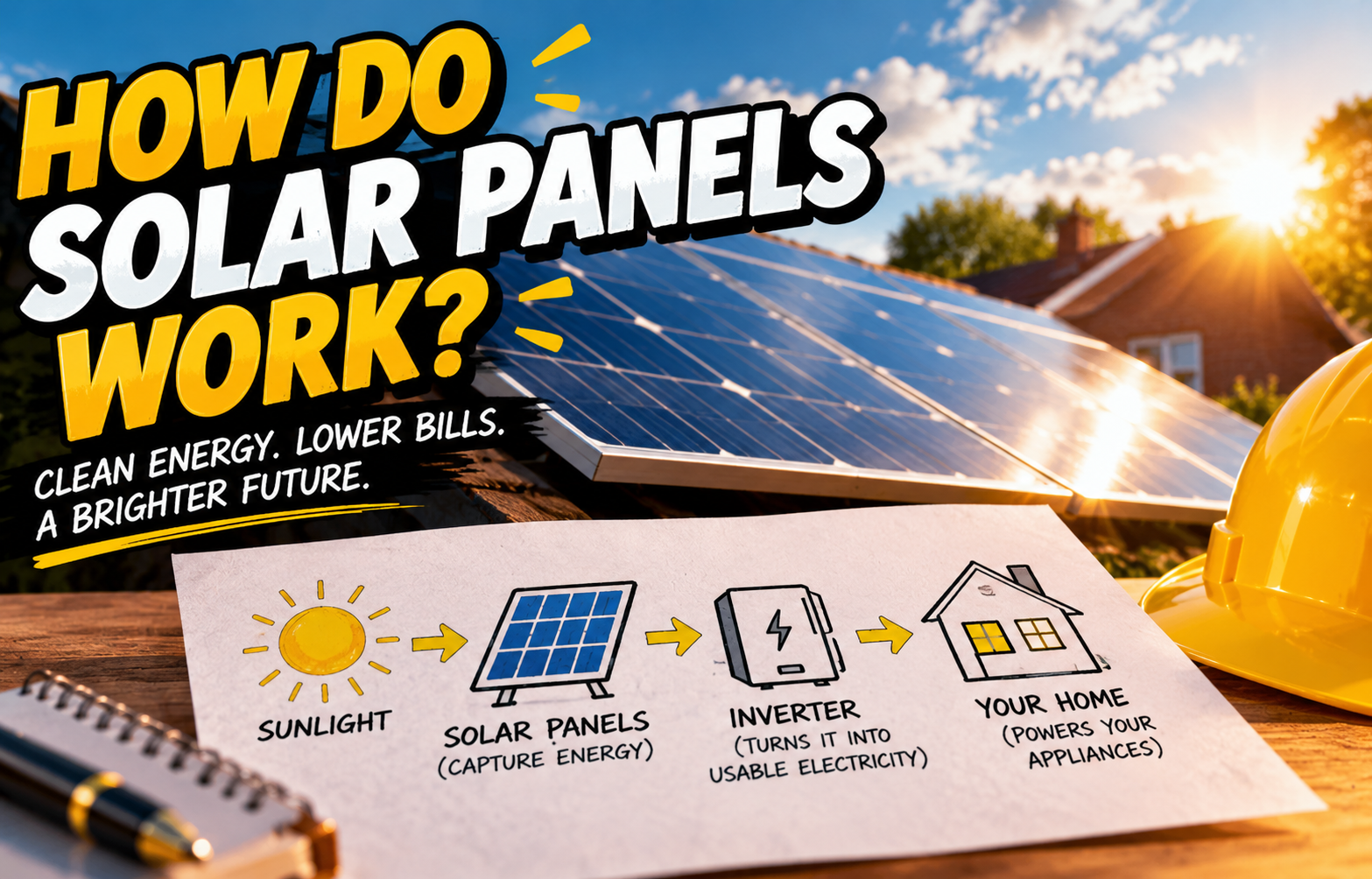
How Do Solar Panels Work?
What is Solar Energy?
Solar energy is electricity generated from sunlight. It is a renewable energy source that allows homes and businesses to produce their own electricity rather than relying entirely on energy supplied by the national grid.
Solar panels, also known as photovoltaic (PV) panels, capture energy from daylight and convert it into usable electricity. They work throughout the year, including on cloudy days, although the amount of electricity they generate depends on the intensity of the sunlight.
Unlike traditional energy sources, solar power does not require burning fossil fuels to generate electricity. This makes it a more sustainable option for businesses looking to reduce their environmental impact while managing their energy costs.
As energy prices rise and people are looking for greener, more efficient ways to produce energy, solar panels have become increasingly popular for home and business owners.
How Do Solar Panels Work To Save Energy Costs?
Generating your own electricity can reduce the amount you need to purchase from an energy supplier, helping to lower your electricity bills.
Can Solar Panels be installed on All Types of Roofs?
Solar panels can be installed on many different types of roofs, including flat roofs, pitched roofs and those made from materials such as metal, concrete tiles and slate. However, the suitability of a roof depends on its condition, structure, available space and exposure to sunlight.
Several factors need to be considered before installing solar panels:
Roof orientation: South-facing roofs generally receive more sunlight in the UK, although east- and west-facing roofs can also be suitable.
Roof pitch: The angle of a roof affects how much sunlight solar panels receive. Panels can be installed on different roof pitches, with mounting systems available to achieve suitable angles where necessary.
Available space: The size of the roof determines how many solar panels can be installed and how much electricity the system can generate.
Roof condition: The roof must be structurally sound and capable of supporting the additional weight of the panels and mounting equipment.
Shading: Nearby buildings, trees and other obstructions can reduce the amount of sunlight reaching the panels and affect their electricity generation.
Flat roofs can also accommodate solar panels, often using specially designed mounting systems to position them at an appropriate angle. However, the installation needs to account for wind loading, drainage and the roof’s structural capacity.
A professional survey can help establish whether a roof is suitable for solar panels and identify any installation requirements. Insolation Solar can help businesses assess their premises and explore solar installations suited to their buildings and energy requirements.
How Do Solar Panels Work for Businesses?
Commercial premises often have substantial roof space, making them suitable for larger solar installations capable of generating significant amounts of electricity.
Solar panels can supply electricity for everyday business operations, including lighting, heating systems, machinery, computers and refrigeration. Businesses that use considerable amounts of electricity during daylight hours may be able to make particularly good use of the energy their panels generate.
Despite the scale of energy usage and prices, businesses benefit just as much as homeowners and see a return on investment.
At Insolation Solar, we help businesses explore commercial solar installations suited to their premises and energy requirements. From the initial assessment through to installation, we can help you identify opportunities to generate your own electricity and reduce your reliance on the grid.
For more FAQs, see our page here.
For a free site survey and quotation, get in touch with us today.